
AI multi-view या 3D rendering: kaunsa workflow aapke print goal ke liye sahi hai?
AI multi-view generation concept exploration ke liye tez hoti hai, jabki 3D rendering geometry, camera aur repeatable print output par zyada strong control deti hai.
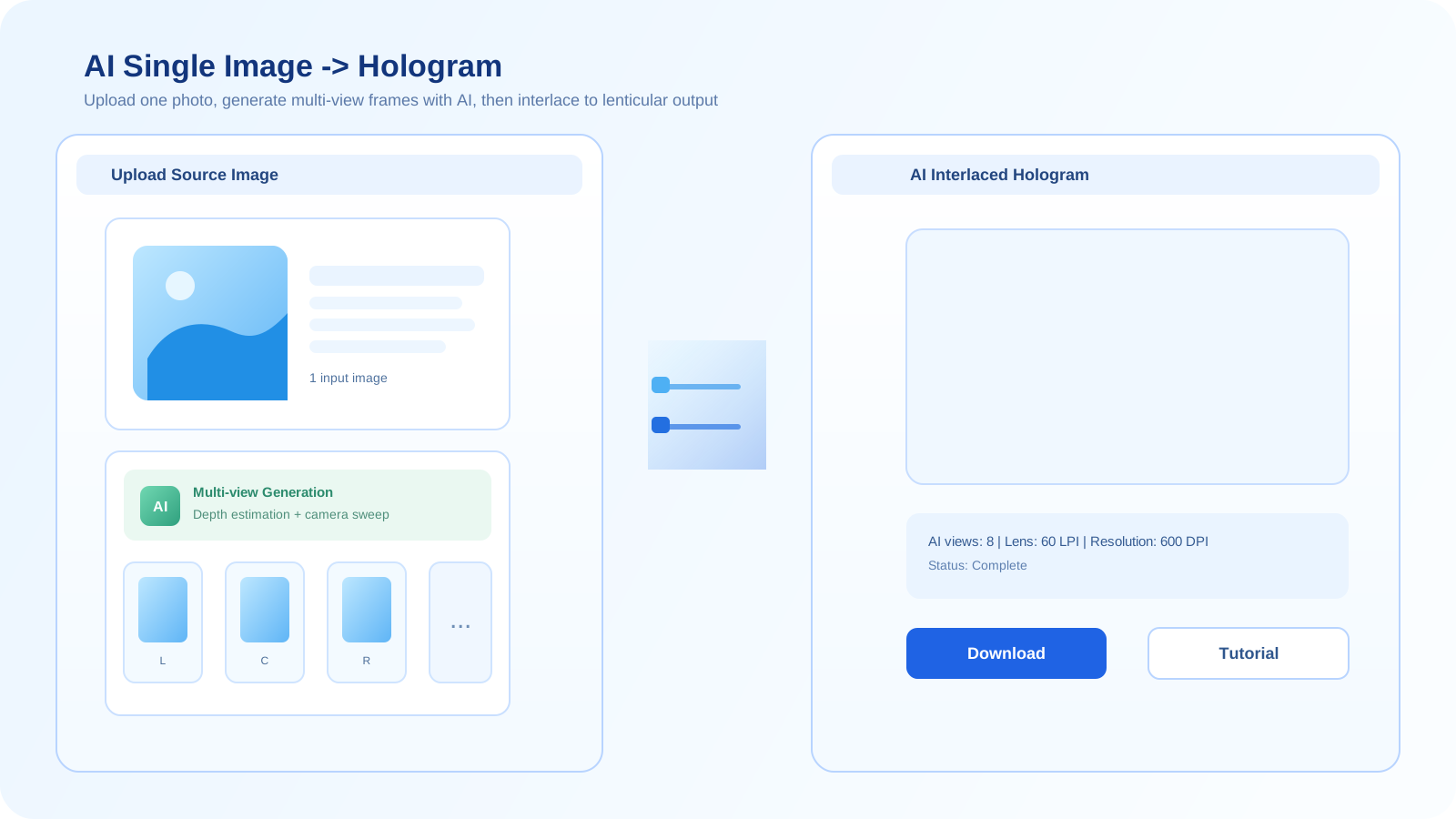
dono workflows ke beech asal me kya badalta hai
AI multi-view tab sabse strong hoti hai jab speed sabse important ho aur aapko full 3D scene banaye bina kai plausible views chahiye hon.
3D rendering tab zyada strong hoti hai jab aapko real geometry, stable camera behavior aur final print production ke liye cleaner depth control chahiye ho.
kab AI multi-view better choice hoti hai
rapid concept testing, early product direction, moodboards aur un situations ke liye AI multi-view chunen jahan aapke paas abhi real 3D asset nahi hai.
AI generator kholenkab 3D rendering better choice hoti hai
3D rendering tab chunen jab aapko exact geometry, more reliable depth, better lighting control aur repeatable lenticular output tak cleaner route chahiye ho.
3D generator kholenगति
AI multi-view aam taur par first-pass exploration aur direction testing ke liye tez hoti hai.
नियंत्रण
3D rendering production use ke liye camera, material aur depth par kaafi zyada strong control deti hai.
output reliability
jab final result exact geometry aur repeatable viewing behavior par depend karta ho, tab 3D rendering aam taur par zyada stable hoti hai.
अक्सर पूछे जाने वाले सवाल
kya AI multi-view print work ke liye kaafi achchi hai?
ye concept aur kuch print-prep scenarios ke liye kaafi ho sakti hai, lekin phir bhi ye true geometry-driven pipeline ke bajay estimation workflow hi hai.
agar AI faster hai to main phir bhi 3D rendering kyun use karun?
kyunki 3D rendering aapko camera behavior, depth range, lighting aur repeatable output quality par zyada reliable control deti hai.
mujhe kis se shuru karna chahiye?
AI se tab shuru karein jab speed aur ideation sabse important ho. 3D se tab shuru karein jab aapke paas pehle se model assets hon ya jab final print quality precise geometry par depend karti ho.