توليد الصور متعددة الزوايا بالذكاء الاصطناعي: ماذا يفعل وكيف يعمل
ينتج multi-angle generation عدة viewpoints للموضوع نفسه مع الحفاظ على identity وstyle. التحدي الاساسي هو تغيير camera viewpoint من دون ادخال geometry drift او texture instability او style collapse.
القدرات الوظيفية الاساسية
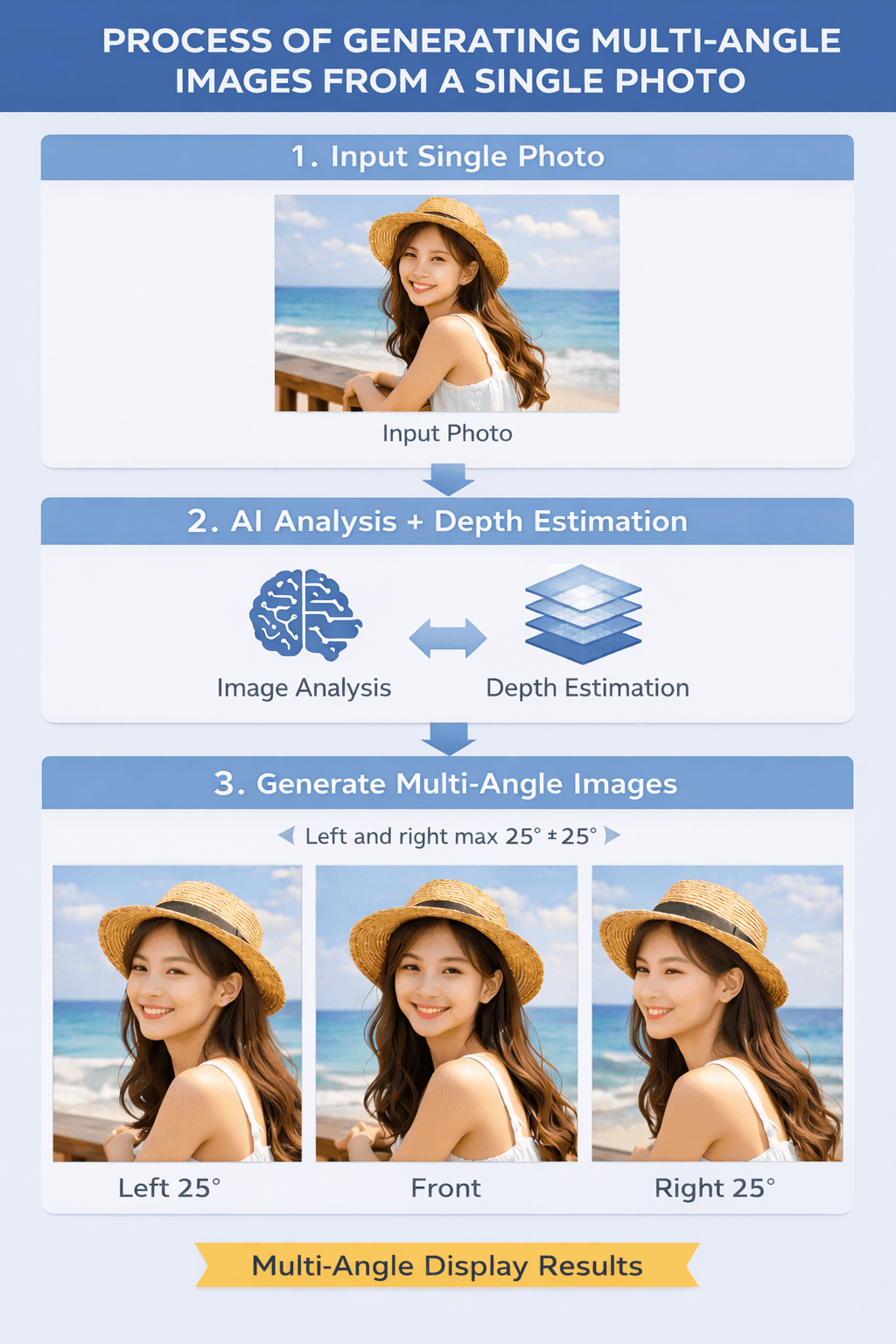
تستقبل الميزة تعريفا واحدا للموضوع وتنتج مجموعة views مضبوطة مثل front وside وclose-up. تحافظ generation constraints على خصائص material وcolor وshape عبر جميع المخرجات.
بالمقارنة مع single-image prompts المستقلة، تستخدم multi-angle pipeline shared conditioning وviewpoint control حتى تبقى كل مخرجات جزءا من نفس visual instance.
Generation pipeline
- حدد immutable subject constraints مثل shape traits وmaterial cues وcolor map وstyle rules.
- اضبط viewpoint targets لكل frame، مثل front و45-degree وside وdetail.
- قم بالتوليد مع shared conditioning ثم نفذ consistency checks على silhouette وtexture continuity وkey landmarks.
- اختر المجموعة الاكثر stable وقم بتصديرها كـ multi-view batch متماسك.
Viewpoint control
تحكم في progression زوايا الكاميرا مع الحفاظ على subject identity ثابتة عبر جميع frames.
Preservation of consistency
قلل feature drift من خلال فرض conditioning مستقر والتحقق من structural landmarks.
Output validation
استخدم QA checklist قابلة للتكرار للتحقق من shape وmaterial response وcross-view continuity.
الاسئلة الشائعة
لماذا يبدو الموضوع مختلفا احيانا بين زاوية واخرى؟
تاتي هذه الفروق عادة من shared constraints الضعيفة. تقوية subject-defining tokens وجعل viewpoint prompts اكثر وضوحا يحسن الاستقرار.
ما هو الحد الادنى المفيد فعلا من الزوايا؟
الاساس التقني الشائع هو front و45-degree وside مع detail view واحدة. وهذا يكفي عادة لتقييم اتساق geometry وtexture معا.
كيف يمكنني تحسين الجودة بشكل منهجي؟
استخدم fixed prompt templates وcontrolled seeds وmulti-view QA rubric تركز على silhouette وlandmarks وmaterial continuity.