AI 다각도 이미지 생성: 무엇을 하고 어떻게 작동하는가
multi-angle generation 은 동일한 subject 의 여러 viewpoint 를 생성하면서 identity 와 style 을 유지합니다. 핵심 과제는 camera viewpoint 를 바꾸면서도 geometry drift, texture instability, style collapse 를 일으키지 않는 것입니다.
핵심 기능 역량
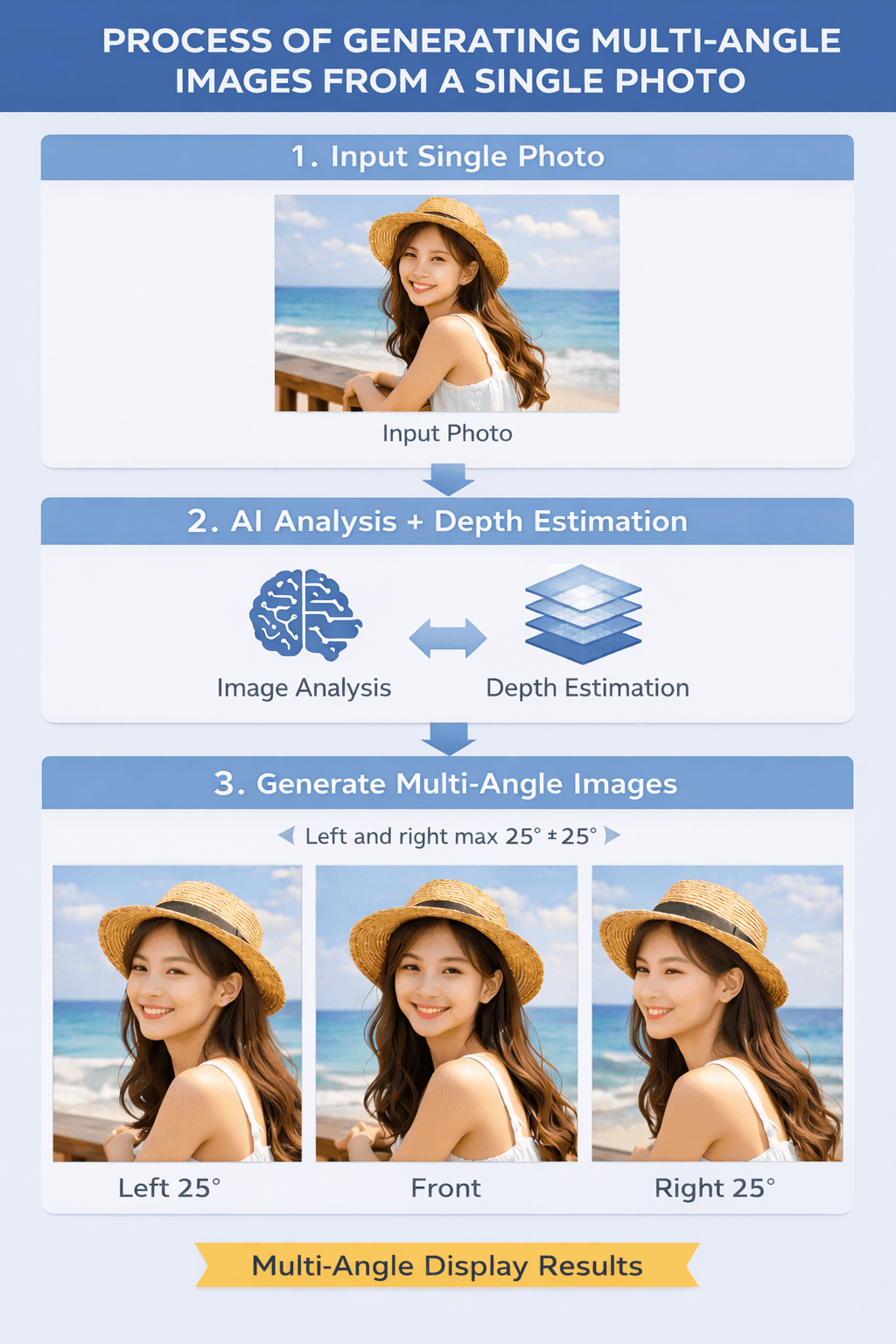
이 기능은 하나의 subject definition 을 받아 front, side, close-up 같은 controlled set of views 를 출력합니다. generation constraints 는 material, color, shape characteristics 를 여러 output 사이에서 안정적으로 유지합니다.
독립적인 single-image prompts 와 비교하면, multi-angle pipeline 은 shared conditioning 과 viewpoint control 을 사용하여 각 output 이 동일한 visual instance 의 일부로 남도록 합니다.
Generation pipeline
- shape traits, material cues, color map, style rules 와 같은 immutable subject constraints 를 정의합니다.
- 각 frame 에 대해 front, 45-degree, side, detail 과 같은 viewpoint targets 를 설정합니다.
- shared conditioning 으로 생성한 뒤 silhouette, texture continuity, key landmarks 에 대한 consistency checks 를 실행합니다.
- 가장 stable 한 set 을 선택하고 coherent 한 multi-view batch 로 export 합니다.
Viewpoint control
subject identity 를 고정한 채 camera angle progression 을 제어합니다.
Consistency preservation
stable conditioning 을 강제하고 structural landmarks 를 검증하여 feature drift 를 줄입니다.
Output validation
shape, material response, cross-view continuity 를 확인하기 위해 반복 가능한 QA checklist 를 사용합니다.
자주 묻는 질문
왜 각도에 따라 subject 가 다르게 보이기도 하나요?
대개 shared constraints 가 약하기 때문입니다. subject-defining tokens 를 강화하고 viewpoint prompts 를 명시적으로 유지하면 안정성이 향상됩니다.
실제로 유용한 최소 angle set 은 무엇인가요?
일반적인 technical baseline 은 front, 45-degree, side, 그리고 하나의 detail view 입니다. 이것만으로도 geometry 와 texture consistency 를 평가하기에 충분합니다.
품질을 체계적으로 높이려면 어떻게 해야 하나요?
fixed prompt templates, controlled seeds, 그리고 silhouette, landmarks, material continuity 에 초점을 둔 multi-view QA rubric 을 사용하세요.