การสร้างภาพหลายมุมด้วย AI: ทำอะไรได้และทำงานอย่างไร
Multi-angle generation สร้างหลาย viewpoints ของ subject เดียวกันพร้อมรักษา identity และ style เอาไว้ ความท้าทายหลักคือการเปลี่ยน camera viewpoint โดยไม่ทำให้เกิด geometry drift, texture instability หรือ style collapse
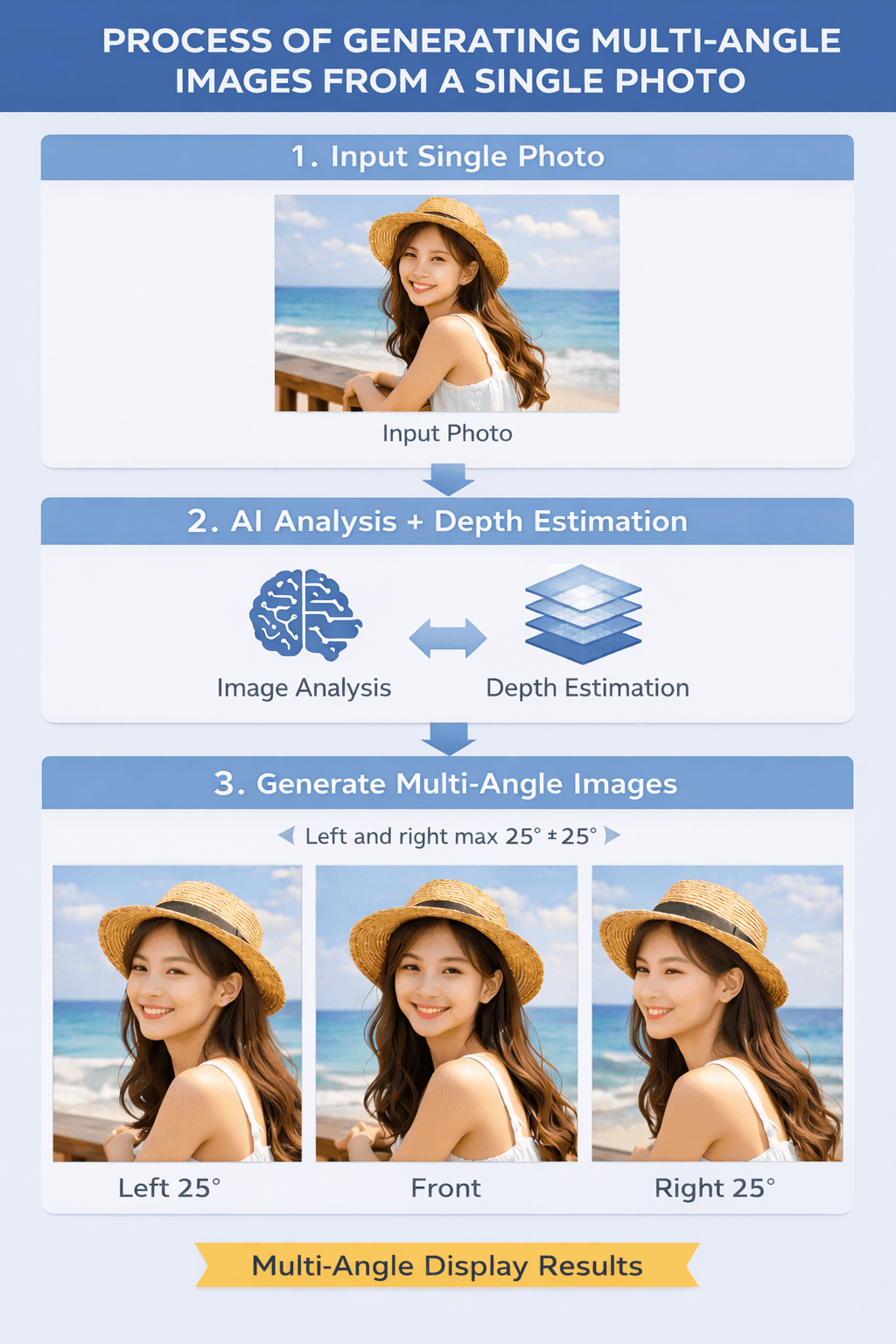
ความสามารถหลักของฟีเจอร์
ฟีเจอร์นี้รับ subject definition เพียงหนึ่งชุด แล้วสร้าง controlled set of views เช่น front, side และ close-up โดย generation constraints จะช่วยให้ material, color และ shape characteristics คงที่ในทุก output
เมื่อเทียบกับ single-image prompts แบบแยกกัน multi-angle pipeline จะใช้ shared conditioning และ viewpoint control เพื่อให้ทุก output ยังคงเป็นส่วนหนึ่งของ visual instance เดียวกัน
Generation pipeline
- กำหนด immutable subject constraints เช่น shape traits, material cues, color map และ style rules
- กำหนด viewpoint targets สำหรับแต่ละ frame เช่น front, 45-degree, side และ detail
- สร้างผลลัพธ์ด้วย shared conditioning และตรวจ consistency ของ silhouette, texture continuity และ key landmarks
- เลือกชุดที่ stable ที่สุดแล้ว export ออกมาเป็น coherent multi-view batch
Viewpoint control
ควบคุมลำดับของ camera angles โดยยังคง subject identity ให้คงที่ตลอดทุก frame
Consistency preservation
ลด feature drift ด้วยการบังคับใช้ stable conditioning และตรวจสอบ structural landmarks
Output validation
ใช้ QA checklist ที่ทำซ้ำได้เพื่อยืนยัน shape, material response และ cross-view continuity
คำถามที่พบบ่อย
ทำไม subject ถึงดูต่างกันในแต่ละมุมบ้าง?
ความต่างมักเกิดจาก shared constraints ที่อ่อนเกินไป การเพิ่มความชัดเจนให้ subject-defining tokens และทำ viewpoint prompts ให้ explicit จะช่วยเพิ่มความเสถียรได้มาก
minimum useful angle set คืออะไร?
technical baseline ที่ใช้กันบ่อยคือ front, 45-degree, side และ detail view หนึ่งภาพ ซึ่งเพียงพอสำหรับประเมินทั้ง geometry และ texture consistency
จะปรับปรุงคุณภาพอย่างเป็นระบบได้อย่างไร?
ใช้ fixed prompt templates, controlled seeds และ multi-view QA rubric ที่โฟกัสที่ silhouette, landmarks และ material continuity