
3D Lenticular Photo Principle Explained
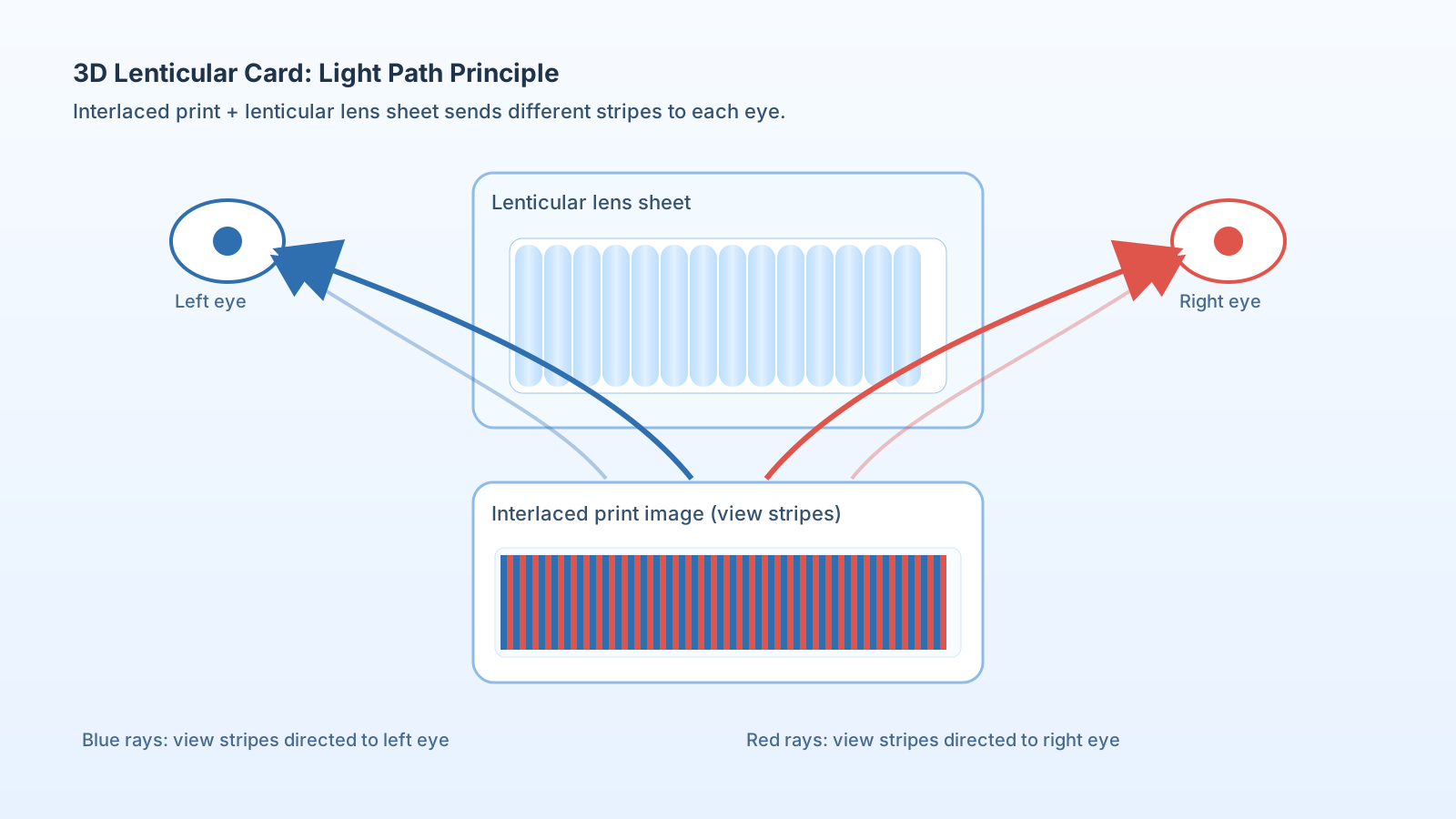
A 3D lenticular photo combines many slightly different viewpoints into one interlaced image, then uses a lenticular lens sheet so each eye sees different slices. Your brain fuses these views into perceived depth.
The Core Optical Principle
Lenticular lenses are tiny cylindrical lenses arranged in parallel. Each lens directs light from different printed stripes toward different viewing angles.
When viewpoint-specific stripes are aligned under the correct lens pitch, moving your head changes which stripes reach your eyes, producing horizontal parallax and a clear 3D effect.
From Multi-View to Interlaced Image
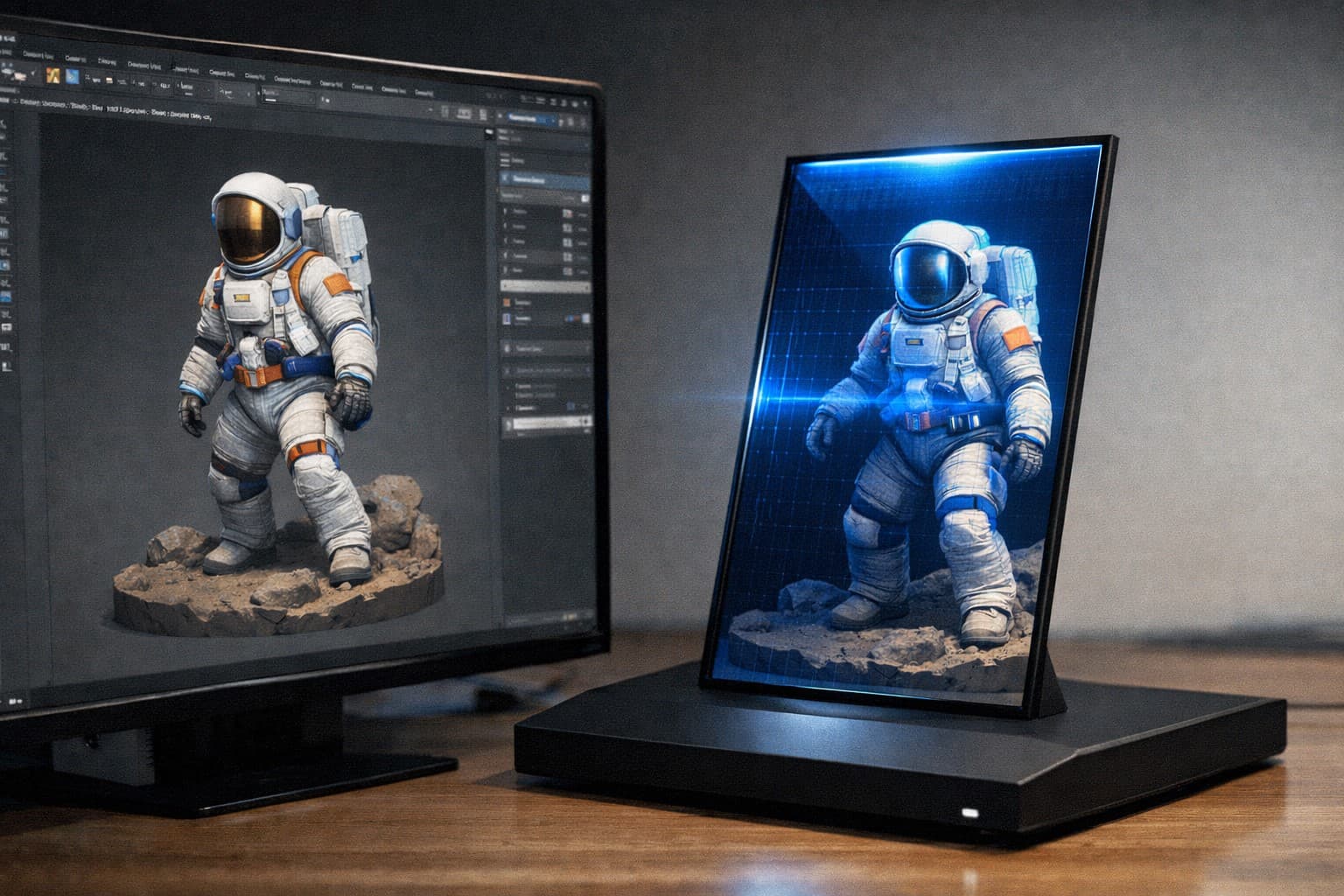
You first render or collect a sequence of views of the same scene. In digital workflows this often starts from a 3D model or a quilt-style view set.
Interlacing then rearranges columns of pixels from each view into one print image. The lens sheet decodes this interlaced pattern optically at display time.
Production Steps
- Prepare 3D content and define camera range for comfortable depth.
- Render multiple evenly spaced horizontal views.
- Interlace views using lens pitch and printer DPI settings.
- Print and laminate with accurate lens-to-image registration.
Why Print Calibration Matters
Small pitch or alignment errors can cause ghosting, blur, or depth inversion. Accurate DPI, pitch, and offset calibration is essential for stable results.
For repeatable quality, keep an ICC-managed print pipeline and validate output with test strips before final production.
Frequently Asked Questions
Is a 3D lenticular photo the same as an animated flip image?
They use the same lens principle, but 3D depth uses viewpoint parallax, while flip effects switch between frames. A design can mix both, but optimization targets differ.
How many views are needed for good depth?
It depends on lens pitch, print size, and viewing distance. More views can smooth motion parallax, but only if print resolution can preserve stripe detail.
Can 2D photos be converted into lenticular 3D?
Yes, with depth estimation or layered compositing. Quality depends on depth-map accuracy and how natural occlusion transitions are handled.