AI多角度画像生成: 何ができて、どう動くのか
multi-angle generation は、被写体の identity と style を保ちながら複数の viewpoint を生成します。中心的な課題は、camera viewpoint を変えても geometry drift、texture instability、style collapse を起こさないことです。
主要な機能能力
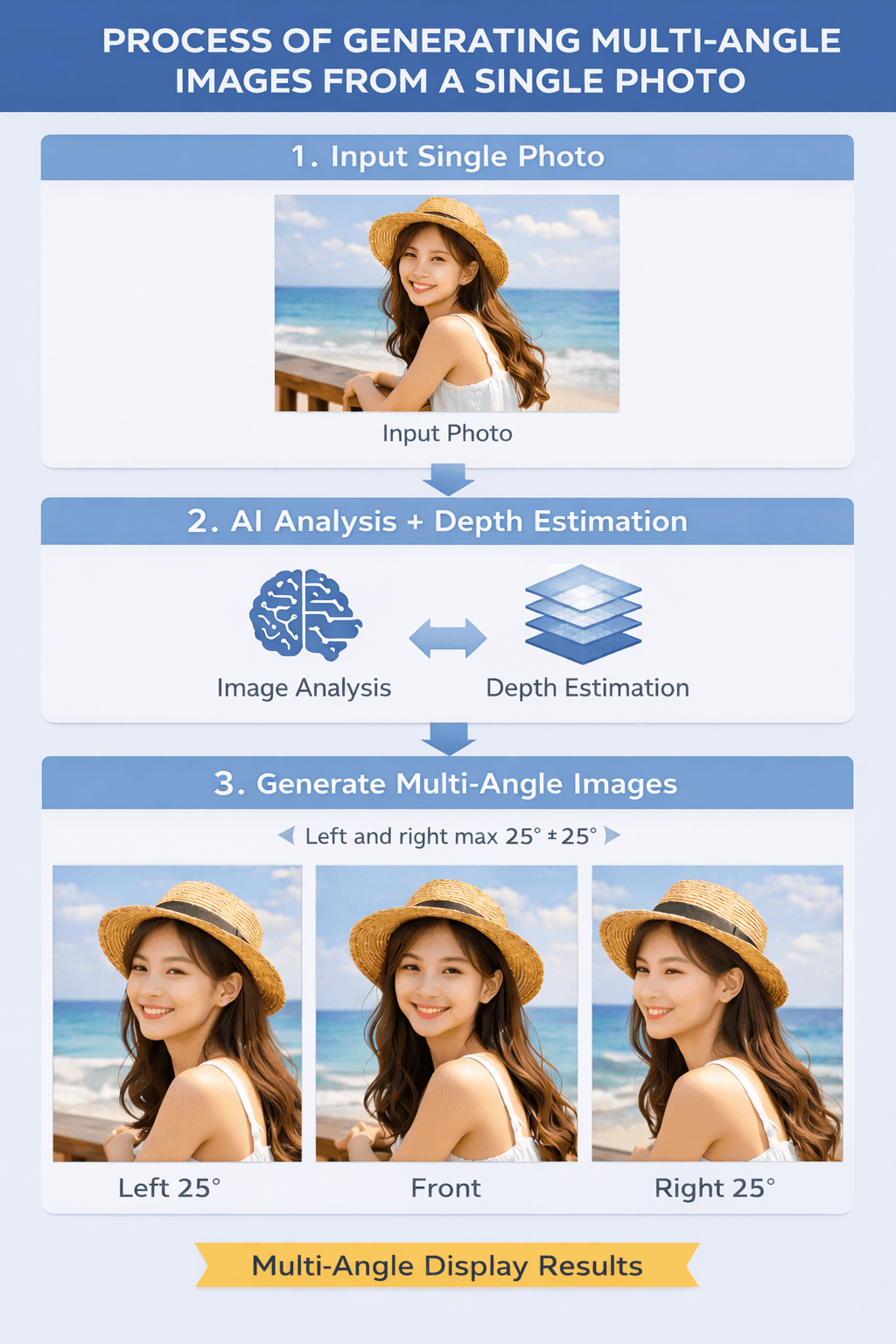
この機能は一つの subject definition を受け取り、front、side、close-up などの controlled set of views を出力します。generation constraints により、material、color、shape characteristics を複数の output 間で安定させます。
独立した単画像 prompt と比べて、multi-angle pipeline は shared conditioning と viewpoint control を使うため、各 output が同じ visual instance の一部として保たれます。
Generation pipeline
- shape traits、material cues、color map、style rules といった immutable subject constraints を定義します。
- 各 frame に対して front、45-degree、side、detail などの viewpoint target を設定します。
- shared conditioning で生成し、silhouette、texture continuity、key landmarks の consistency checks を行います。
- 最も stable な set を選び、coherent な multi-view batch として export します。
Viewpoint control
subject identity を固定したまま、camera angle progression を制御します。
Consistency preservation
stable conditioning を維持し、structural landmarks を検証することで feature drift を減らします。
Output validation
shape、material response、cross-view continuity を確認するために、再利用可能な QA checklist を使います。
よくある質問
なぜ角度によって被写体が違って見えることがあるのですか?
多くの場合、shared constraints が弱すぎることが原因です。subject-defining tokens を強め、viewpoint prompts を明示的にすることで安定性が向上します。
実用的な最小角度セットは何ですか?
一般的な technical baseline は、front、45-degree、side、そして一枚の detail view です。これで geometry と texture consistency の両方を評価できます。
どうすれば体系的に品質を改善できますか?
fixed prompt templates、controlled seeds、そして silhouette、landmarks、material continuity に焦点を当てた multi-view QA rubric を使ってください。